

If you’re new to Bitcoin mining, you’ve probably noticed that every “best miner for beginners” article seems to recommend a different machine. That’s because “beginner” can mean very different things. It might mean someone who wants to learn on a desk toy for under $200. It might mean someone with a few thousand dollars who wants a real machine that actually earns. Or it might mean someone who wants to hand the whole thing to a professional host and never hear a fan again.
So rather than crown one winner, I’m going to answer the question the way I’d answer a friend: it depends on which beginner you are, and here’s how to tell. This is general information, not financial advice.
The Short Answer
- Just want to learn how Bitcoin mining works? A small open-source miner such as the Bitaxe Gamma is one of the best first products. It is inexpensive, low-power and teaches you pools, workers, shares and hashrate without committing thousands of dollars. Think of it primarily as a learning device rather than a reliable income machine.
- Want a serious Bitcoin ASIC? For many first-time buyers, a modern air-cooled Antminer S21-class miner with professional hosting offers a practical balance of purchase price, efficiency and infrastructure requirements.
- Working with a tighter budget? An S19 XP can now be much cheaper to buy than older 2026 guides suggest, but its lower efficiency gives you less room if electricity prices rise or hashprice falls.
- Have a larger budget and want maximum efficiency? The Antminer S23 Hydro is a premium 580 TH/s, 9.5 J/TH option. Its three-phase electrical and liquid-cooling requirements make professional hosting the practical choice for most beginners.
First, What Makes a Product “Beginner-Friendly”?
OneMiners’ criteria-first beginner framework is useful because it starts with the economics rather than simply ranking machines. Before buying, compare purchase cost per terahash, efficiency, warranty, hosting compatibility and resale value.
Warranty terms also depend on how the miner is deployed. OneMiners currently states that eligible miners hosted with the company receive a 7-year full warranty covering repairs, parts and labor, while miners shipped to customers normally carry the standard manufacturer warranty. Always confirm the exact coverage for the model you are purchasing.
Cooling compatibility matters just as much. Air-cooled S21-class machines can be operated privately if you have suitable electrical capacity, ventilation and noise isolation. Hydro miners require specialized liquid-cooling infrastructure and, in the case of the S23 Hydro, three-phase 380–415 V power, so professional hosting is considerably more practical for a first-time buyer.
I’d add one more test: how forgiving is the purchase? Beginners are more likely to misjudge electricity cost, noise, hardware price or future mining conditions. A good first miner is not simply the one with the highest hashrate—it is one whose economics still leave some room when conditions change.
Option 1: The Bitaxe Gamma — Best for Learning
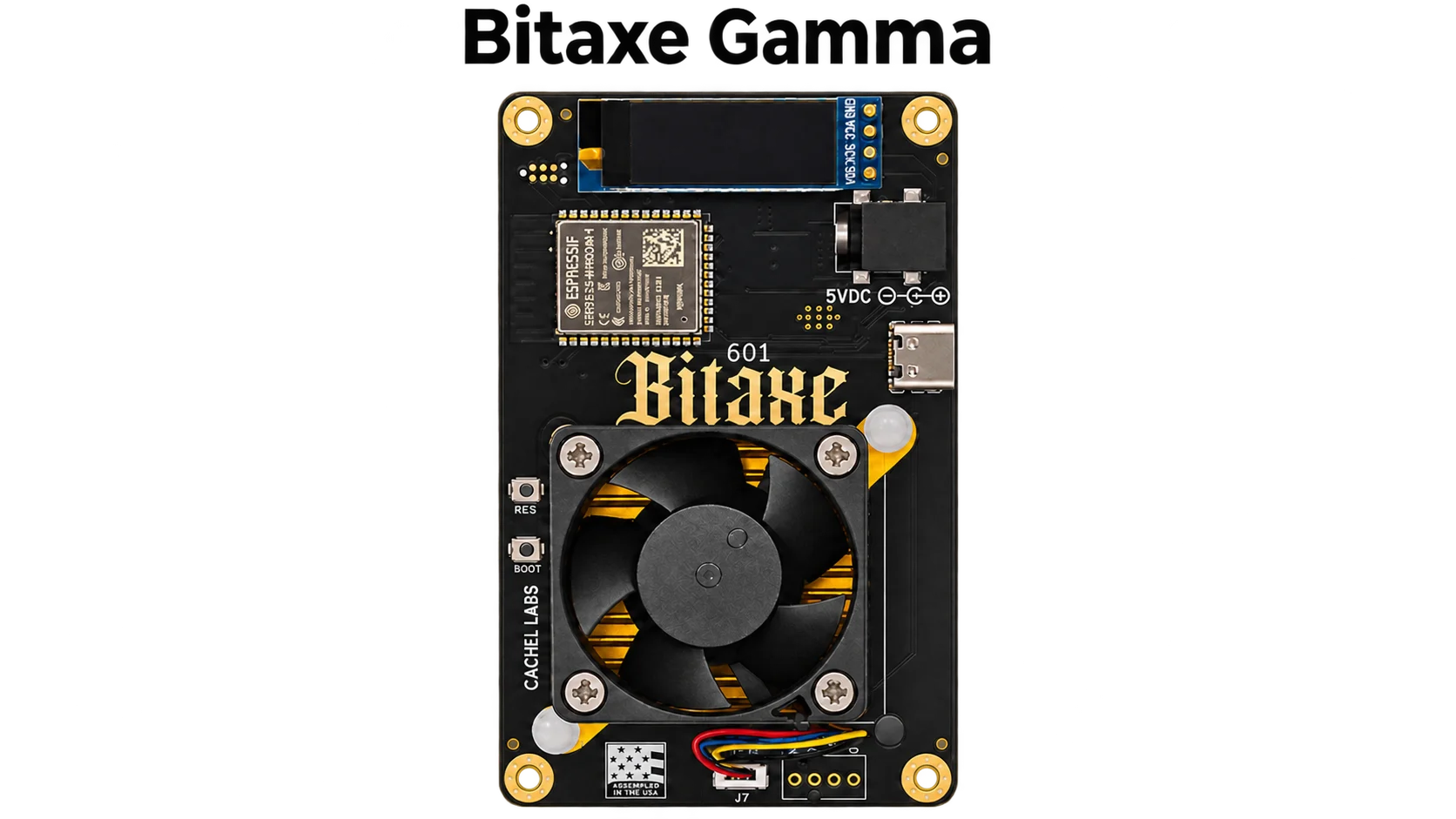
DirectPool’s October 2026 guide ranks the Bitaxe Gamma as its best first home miner. Its typical specifications are around 1.2 TH/s, 18 W and 15 J/TH, with prices commonly ranging from about $110 to $230. It is open source, browser-configured and quiet enough for a desk or home office.
The important part is setting expectations correctly. DirectPool’s October 5 snapshot estimated roughly $18 per year in mining revenue against about $24 per year in electricity at $0.15/kWh. Mining conditions have weakened since then. At a current hashprice around $32.86/PH/day, 1.2 TH/s represents only about $14.40 per year in expected gross pool revenue, while 18 W of continuous power still costs roughly $23.65 per year at $0.15/kWh.
So I would buy a Bitaxe to learn, experiment and participate in Bitcoin mining—not because it offers dependable financial payback.

Option 2: Antminer S21 Class — Best Balanced Serious Choice
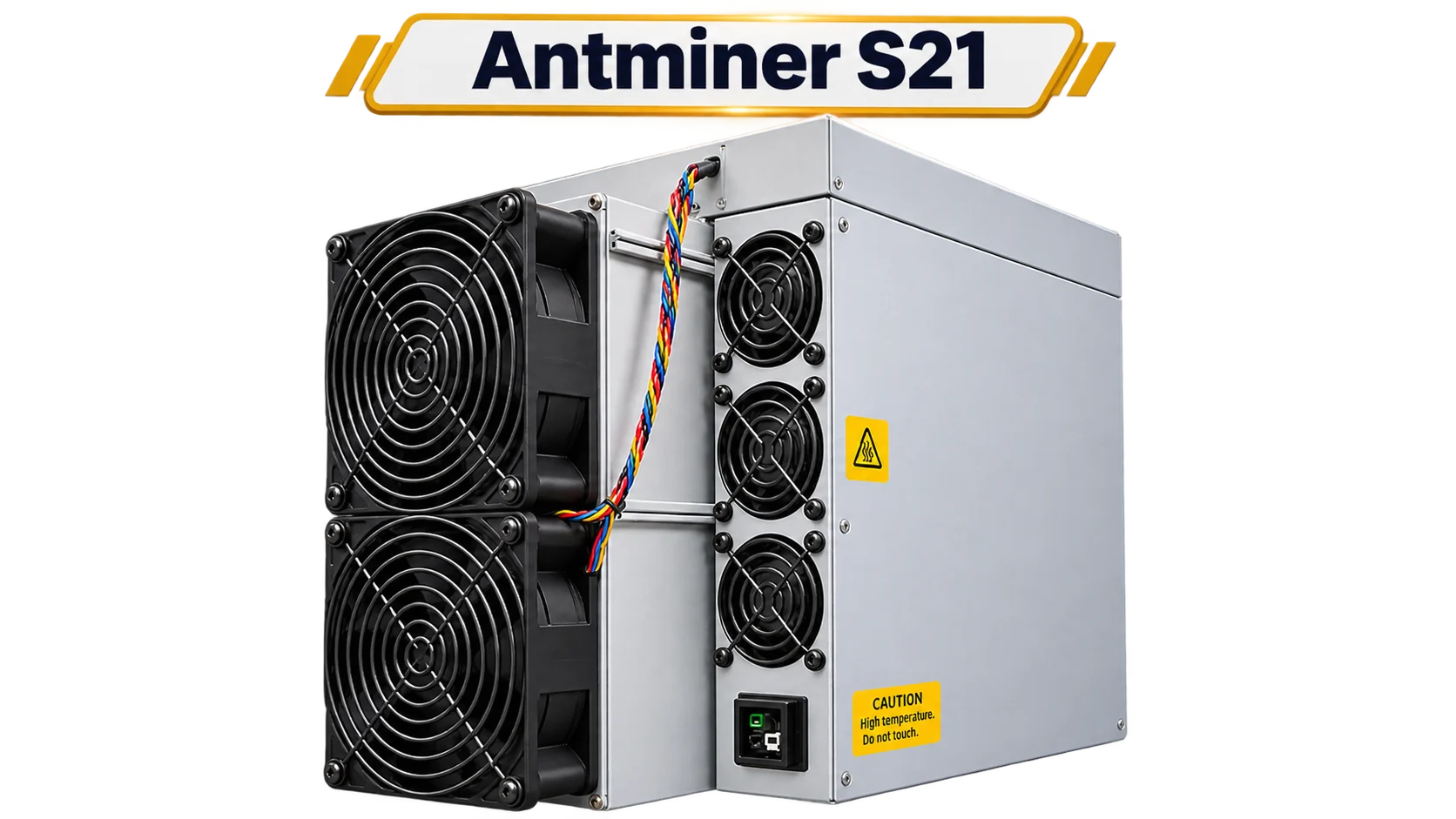
For a first full-size Bitcoin ASIC, the Antminer S21 remains a useful benchmark. Bitmain’s standard 200 TH/s version is rated at 200 TH/s, 3,500 W and 17.5 J/TH, with noise reaching roughly 76 dBA at high fan speed.
Its biggest disadvantage for a beginner is not the miner itself; it is where you run it. A 3.5 kW ASIC uses about 84 kWh every day, so residential electricity can overwhelm its mining revenue very quickly.
The Math That Decides Everything
At the current spot hashprice of roughly $32.86 per PH/s per day, a 200 TH/s S21 produces about $6.57 per day in expected gross mining revenue before pool fees.
| Where it runs | Electricity rate | Power cost/day | Approx. margin/day before pool fees and other costs | Approx. margin/month |
|---|---|---|---|---|
| OneMiners long-term U.S. hosting example | 4.5¢/kWh | ~$3.78 | ~+$2.79 | ~+$84 |
| Home electricity example | 15¢/kWh | ~$12.60 | ~−$6.03 | ~−$181 |
This is a snapshot, not a profit forecast. It excludes pool fees, downtime, hardware cost, repairs, taxes and future changes in Bitcoin price or difficulty.
That comparison explains why hosting can be especially helpful for a beginner. Nothing about the ASIC changes; the electricity price does.
Hardware price matters just as much. Recent published prices for the same S21 family vary dramatically by seller, exact variant and date. OneMiners has recently listed S21-family air-cooled hardware at much lower prices than some October retail guides, while DirectPool’s October guide quoted a 2,500–4,000 street range for a 200 TH/s unit.
That difference is too large to ignore. Always get the live price for the exact hashrate variant you are buying and rerun the economics before ordering.
For illustration, if the S21 continues producing about $84 per month after electricity at a 4.5¢ rate:
| Illustrative machine cost | Simple payback at current snapshot |
|---|---|
| ~$900 | ~11 months |
| ~$2,500 | ~30 months |
| ~$4,000 | ~48 months |
These are simple payback figures only. They assume today’s mining conditions never change—which they certainly will—so they should be used to compare purchase prices, not as expected returns.
Option 3: Antminer S19 XP — Cheap Entry, Less Efficiency Cushion
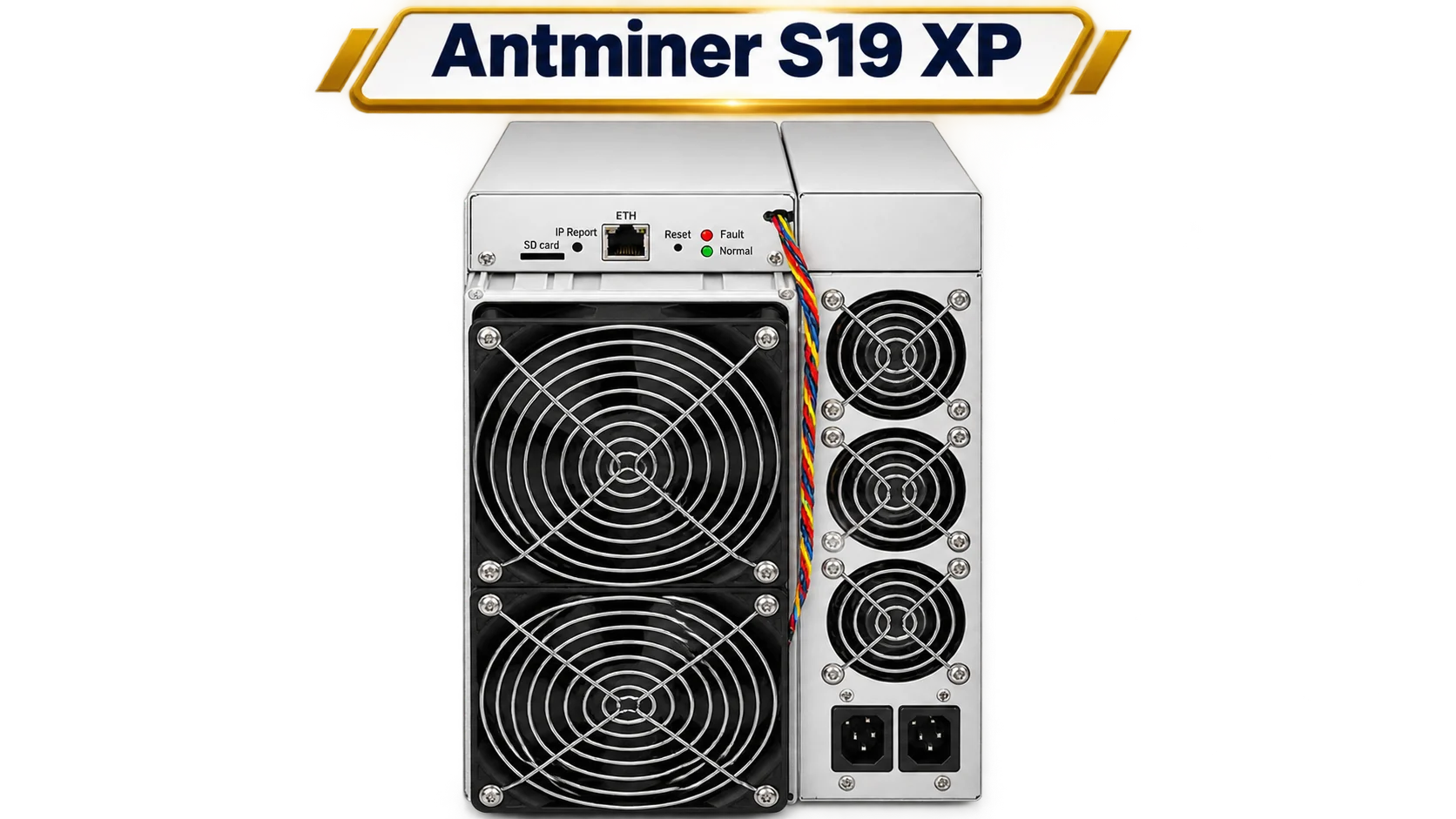
The Antminer S19 XP remains a useful budget example at 141 TH/s, about 3,010 W and roughly 21.3–21.5 J/TH. Older beginner guides priced it around $2,400, but ASIC prices depreciate quickly. The current OneMiners catalog now lists the 141 TH/s model at only a few hundred dollars, so a beginner should not use that old $2,400 figure for today’s payback calculation.
At the current hashprice of roughly $32.86/PH/day, 141 TH/s represents about $4.63 per day in gross expected revenue. At a 4.5¢/kWh hosted electricity rate, the miner uses roughly $3.25 per day in power, leaving about $1.38 per day before pool fees and other expenses.
That makes the S19 XP much more interesting at today’s lower hardware price than the old guide suggests. The catch is still efficiency: its electricity-only break-even is only around 6.4¢/kWh at the current hashprice, giving it substantially less cushion than newer S21- or S23-class hardware.
My take: the S19 XP can now be a reasonable low-capex learning step when paired with very inexpensive hosting. For a beginner planning to operate for several years, however, the greater efficiency of newer hardware gives more protection against rising difficulty or weaker hashprice.
Option 4: Antminer S23 Hydro — Premium Efficiency, Facility-Oriented
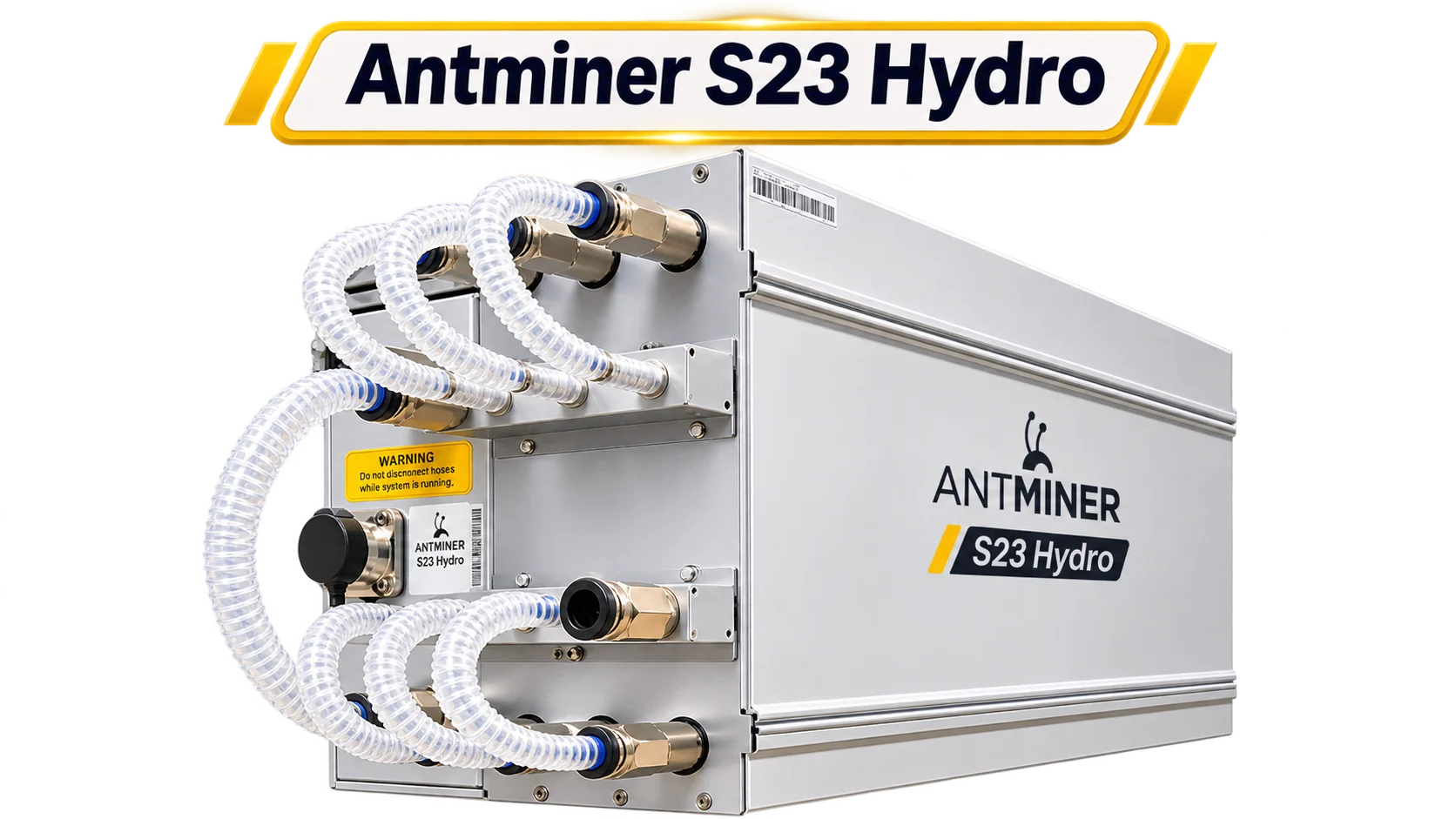
For buyers with a larger budget, the current Antminer S23 Hydro is a very different machine from the specification shown in some older beginner guides.
Bitmain’s official S23 Hydro is rated at 580 TH/s, 5,510 W and 9.5 J/TH. It requires 380–415 V three-phase power and a compatible liquid-cooling system. OneMiners’ current product page lists the same 580 TH/s, 5,510 W and 9.5 J/TH specifications.
That makes it dramatically more efficient than an S21 or S19 XP, but it is not a casual home-mining purchase. For most beginners, the electrical and cooling requirements make professional hosting the practical deployment route.
There is also a separate rack-format model, the U3S23H / S23 Hyd 3U, rated by Bitmain at 1,160 TH/s, 11,020 W and the same 9.5 J/TH efficiency. The 580 TH/s S23 Hydro and the 1,160 TH/s 3U model should not be treated as the same machine.
For a first-time buyer with enough capital and no desire to manage cooling infrastructure, the S23 Hydro can make sense as a premium hosted option. OneMiners is particularly relevant here because it sells the 580 TH/s model and can deploy hydro hardware into compatible hosting infrastructure, while eligible hosted machines receive its extended warranty coverage.
What About the Medium Buyer’s Guide Picks?
My own 2026 Bitcoin Mining Hardware Buyer’s Guide (June 2026) ranks ten machines by buyer type rather than raw numbers. For first-time buyers it points to the Antminer T21 (“best entry into modern mining”) and the S19k Pro (“best budget-friendly professional miner”). That guide doesn’t list specs or prices, so I can’t compare those two numerically here; check the current specs before choosing. Its core advice still holds, though: ask “what’s the best miner for me?” and look at efficiency, not just hashrate. One heads-up from the Bull Miners guide: the T21 is described as needing three-phase power, which won’t suit most home supplies.
A Note on Other Coins and Mini-Miners
You’ll run across Kaspa and Scrypt machines (like the KS5 Pro or Antminer L9) and quiet home heaters such as the Avalon Nano 3S or FutureBit Apollo III. The Bull Miners guide covers many of them, organized by budget. A few cautions: those machines mine other coins, specs differ between sources (the Nano 3S is listed at 6 TH/s in one guide and 4 TH/s in another), and Bull Miners is itself a seller and host, so read it with that in mind. For a first miner, I’d keep it simple and stick to Bitcoin.
The Compare-the-Sources Reality Check
ASIC specifications and pricing move quickly, so the safest hierarchy is simple: use the manufacturer for technical specifications, use live seller pages for today’s purchase price, and use profitability calculators only as snapshots of current network conditions.
That matters with the S23 family. Bitmain officially lists the standard S23 Hydro at 580 TH/s and 5,510 W, while the separate U3S23H 3U model is 1,160 TH/s and 11,020 W. Both operate at approximately 9.5 J/TH.
OneMiners’ current product page for the standard S23 Hydro now matches Bitmain’s 580 TH/s specification. Its broader comparison articles are still useful for understanding efficiency, hosting and electricity economics, but always make sure the model name on the comparison matches the exact unit you are buying.
My Beginner Checklist

- Decide your goal: learn, earn, or heat your home.
- Know your electricity rate. Compare it with the break-even price for the machine.
- Plan the location. Mind noise (75 dB), heat and circuit capacity, or choose hosting.
- 4. Ask for your exact all-in hosting rate and contract terms. OneMiners currently publishes hosting from about 3.6¢/kWh on seven-year prepaid plans, with several U.S. locations around 4.5¢/kWh, and states that management services are included in the published hosting price. Its Pay Later program also allows eligible purchases with 25% upfront and the remaining 75% across three monthly installments. Rates and eligibility can change, so confirm the exact site and plan before buying.
- Check the warranty and uptime terms in writing.
- Get a live price and rerun the payback math.
- Set up a wallet you control and a reputable pool, and check accepted shares after 10 to 30 minutes.
- Avoid scams: guaranteed-return cloud mining, phone “mining” apps and “withdrawal fee” schemes.
Frequently Asked Questions
What is the best Bitcoin miner for a complete beginner? To learn, a Bitaxe Gamma. To earn, a current-generation air-cooled miner like the Antminer S21, hosted.
Can I mine at home as a beginner? Small miners yes; a 3.5 kW ASIC rarely makes sense. It’s loud, needs a dedicated circuit and usually loses money at home power rates.
Is the Bitaxe profitable? Not at typical home rates. DirectPool estimates about $18 earned against $24 of power per year at $0.15/kWh.
How long until a miner pays for itself? It depends on the price you paid, hashprice and your power rate. In my example, roughly 1 to 5 years for a hosted S21.
Is hosting better for beginners? For ASIC miners, usually yes, because it removes noise, heat and electrical work and typically gives lower power rates.
The Bottom Line
So, which product is better for beginners? My honest answer is a pair: the Bitaxe if you want to learn, and a hosted S21-class miner if you want to earn. Everything else is a variation based on your budget and risk tolerance. Whatever you pick, run the numbers with your own electricity rate and the price you’ll actually pay, and don’t buy anything you couldn’t afford to see sit idle for a while.
Sources and Further Reading
- Best ASIC Miners for Beginners in 2026: A Criteria-First Framework — OneMiners
- The 2026 Bitcoin Mining Hardware Buyer’s Guide — Medium
- Crypto Mining for Beginners 2026: Cost Breakdown — OneMiners
- What Are the Best Home Bitcoin Miners in 2026? — DirectPool
- Best ASIC Miner for Beginners 2026 — Bull Miners
- Bitcoin Mining Hardware Comparison: Which ASIC Is Worth Buying? — OneMiners
#BitcoinMining #BitcoinMinerForBeginners #ASICMiners #Antminer #Bitaxe #HostedMining #OneMiners #CryptoMining