Is OneMiners Legit? Everything You Should Know Before Buying If you’ve searched “is OneMiners legit,” you’re doing exactly what you should be doing before spending anywhere from a few thousand to tens of thousands of dollars on ASIC hardware or hosting. The Bitcoin mining industry has a real, well-documented scam problem — fake hosting companies, cloud-mining Ponzi schemes, and counterfeit hardware sellers have cost buyers serious money over the past several years. That history is exactly why “is it legit” is the right first question, for OneMiners or any provider you’re considering. Based on the public evidence available as of September 2026, OneMiners appears to be an operating mining-hardware and hosting business rather than an anonymous website with no identifiable company behind it. OneMiners publicly operates under CircleHash LLC in the United States, publishes company and contact information, has formal Terms and Privacy Policy documents, and has profiles and customer history on third-party review platforms. None of those signals makes any mining investment risk-free, however, so this guide looks at the evidence individually and shows what buyers should still verify before sending money.
Why Mining Scams Are Common Enough to Take Seriously
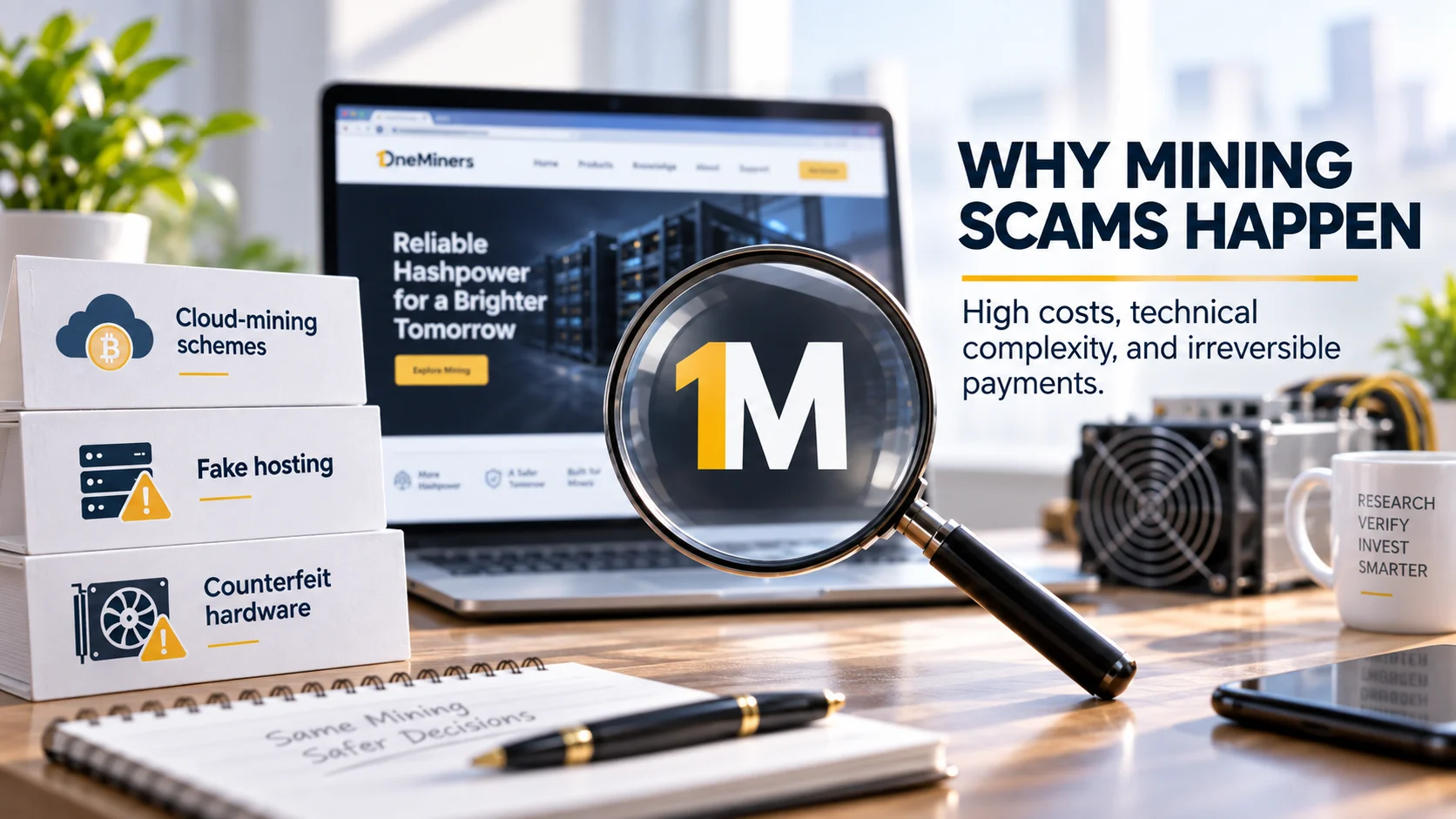
Bitcoin mining sits at an unusual intersection: expensive hardware, technical complexity most buyers can’t personally verify, and payments that are often irreversible once sent. That combination has made it a magnet for bad actors for years. Common patterns worth knowing about:
- Cloud mining Ponzi schemes that promise fixed daily returns with no real mining infrastructure behind them.
- Fake hosting facilities that collect deposits or monthly fees for hardware that either doesn’t exist or isn’t actually running.
- Counterfeit or refurbished-as-new ASIC miners sold at below-market prices to move units fast before buyers notice.
- Phishing sites that clone real companies’ branding, sometimes appearing in paid search ads above the legitimate site. None of this means most mining companies are scams — plenty are legitimate, well-run businesses. It means the burden of verification sits with the buyer, every time, regardless of how polished a website looks.
Red Flags That Should Make You Pause
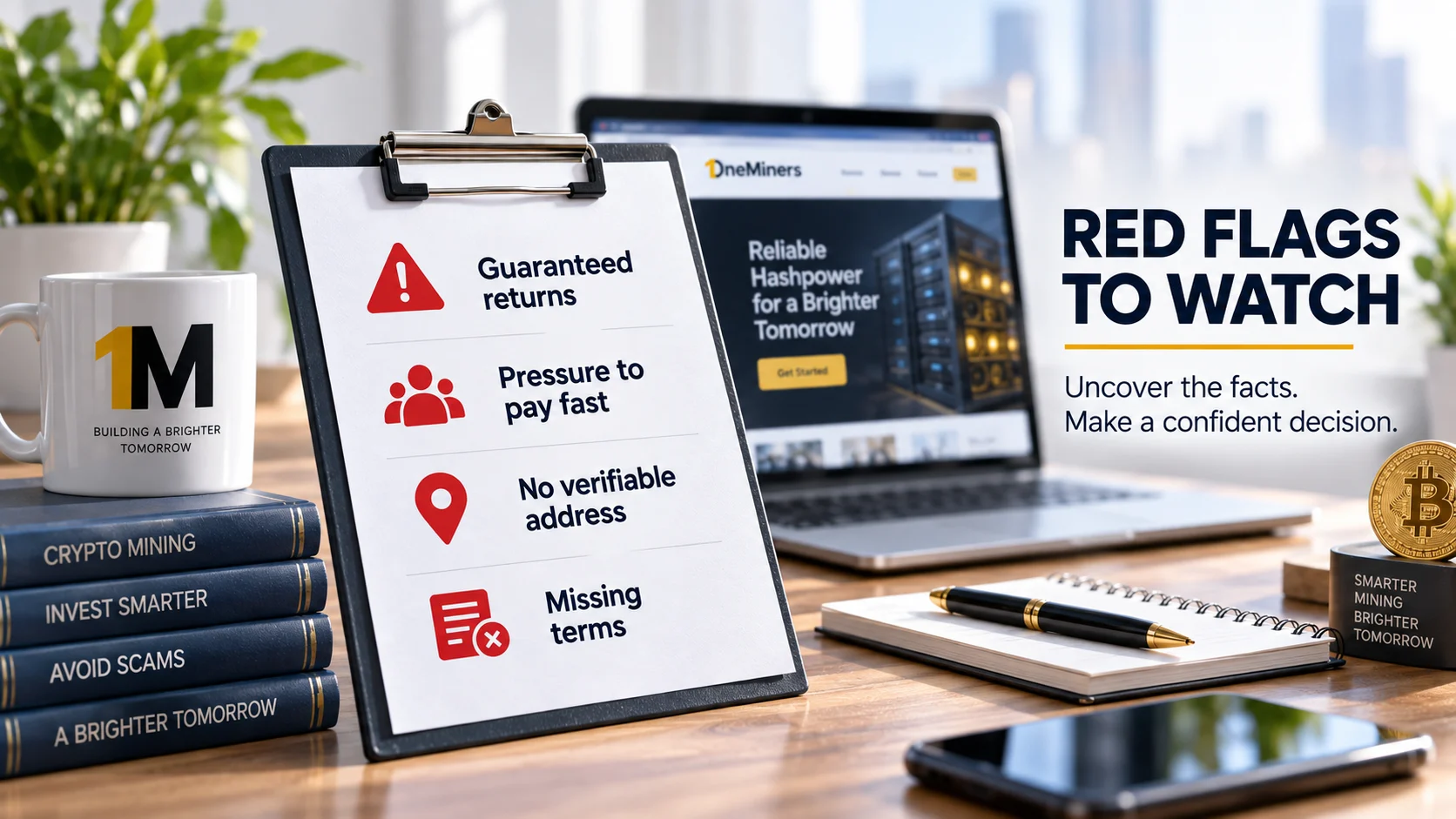
Before getting into what a legitimate company looks like, it’s worth knowing the warning signs that show up consistently in mining-related scams:
- Guaranteed returns or fixed daily profit promises. Mining profitability depends on electricity cost, difficulty, and coin price — none of which any company can lock in for you.
- Pressure to pay quickly via wire transfer, gift cards, or crypto sent directly to a personal wallet with no contract or invoice.
- No verifiable physical address for hosting facilities, or an address that doesn’t match any real, checkable location.
- No presence on independent review platforms — or worse, only a handful of suspiciously recent five-star reviews with no detail.
- Vague or missing ownership information. Legitimate companies are generally willing to say who runs them.
- A domain registered very recently relative to the amount of “years in business” claimed on the site.
- Unwillingness to answer specific questions about SLAs, repair policies, or contract terms in writing. If you notice more than one of these with any provider, that’s a reason to slow down — not necessarily a confirmed scam, but a signal to dig deeper before paying anything.
Green Flags That Suggest a Company Is Operating Legitimately
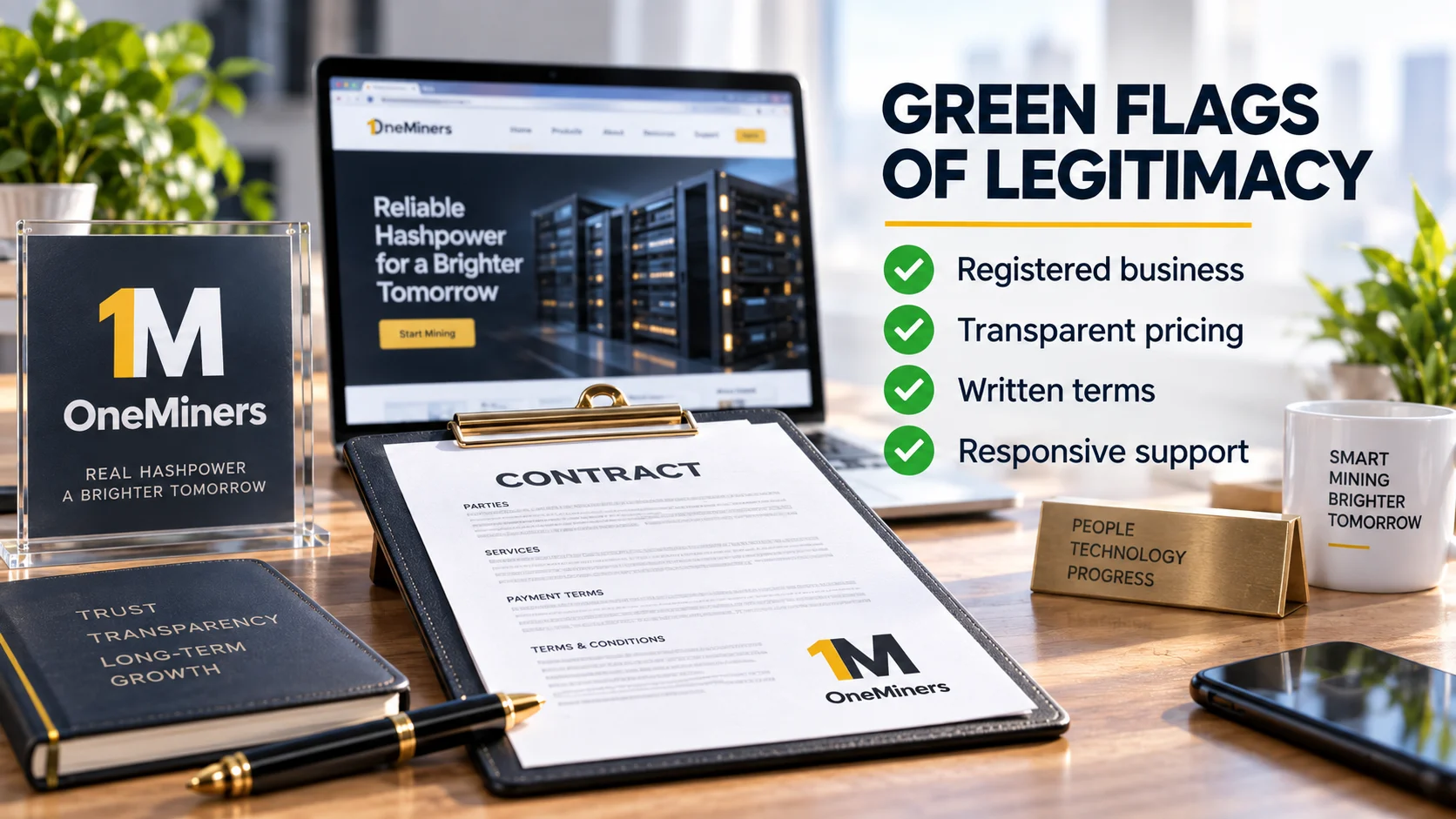
On the other side, here’s what tends to separate real businesses from scams in this space:
- A registered business entity you can look up through your country’s or state’s business registry.
- Transparent, published pricing and hosting terms rather than “contact us for a quote” as the only option.
- Independent third-party evidence — business-registry records, established review platforms, credible editorial coverage, and other sources that aren’t controlled by the company itself.
- A track record on review platforms (Trustpilot, BBB, Reddit threads, mining forums) that spans months or years, not just a recent burst of activity.
- Clear contracts and SLAs you can review before paying anything.
- Responsive, specific customer support that answers direct technical and billing questions rather than deflecting.
- Secure, traceable payment methods, with invoices and records rather than informal payment requests.
How OneMiners Measures Up Against This Framework
There are several publicly verifiable signals that help establish who is behind OneMiners. The company’s official website identifies the U.S. operating entity as CircleHash LLC, based at 701 Tillery Street, Austin, Texas, and publishes an EIN and D-U-N-S number. The same legal entity appears in OneMiners’ current Terms and Conditions and Privacy Policy, which identify CircleHash LLC as the company behind the service. OneMiners’ official company-information page provides those details directly. Independent business and review platforms add another layer of information. As of September 2026, the Better Business Bureau profile for OneMiners lists the business in Austin with an A- BBB rating. Trustpilot’s OneMiners profile currently shows a substantial history of customer reviews rather than only a handful of newly created ratings. These platforms should still be read critically: ratings, complaints, and individual reviews can change and should not be treated as guarantees. Taken together, these signals are more meaningful than website design alone because they give a buyer multiple places to cross-check the company’s identity and operating history. They still do not prove that every future order, hosting deployment, withdrawal, or support interaction will go perfectly. Before making a large purchase, independently verify the contract offered to you, the exact hosting location, current pricing and electricity terms, warranty conditions, cancellation rules, and recent customer feedback.
Questions Worth Asking Directly Before You Pay Anything
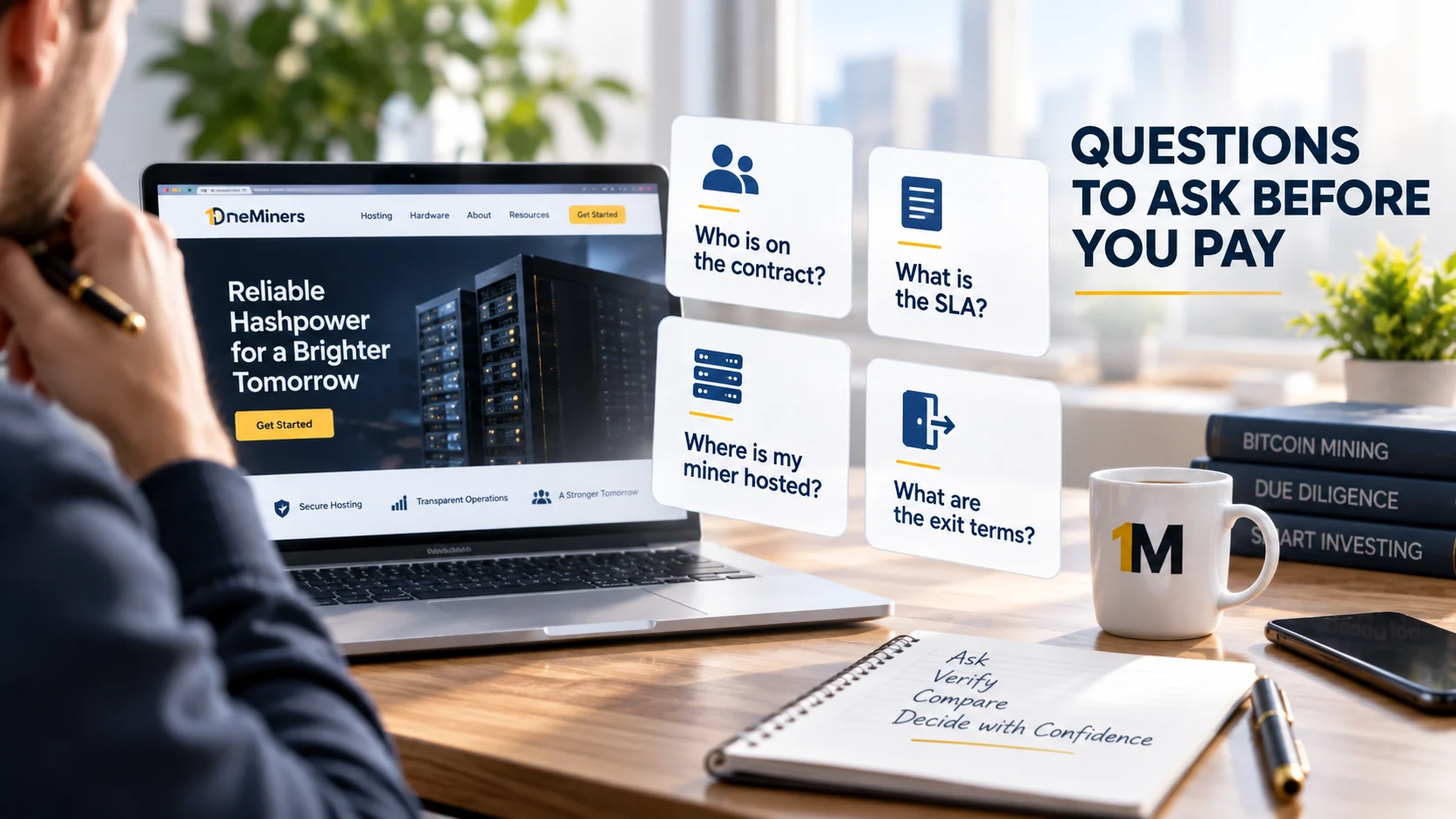
- Can you provide the legal company name and registration details that will appear on my invoice or contract?
- What is the exact written SLA for uptime, and what compensation applies if it isn’t met?
- Which hosting facility will my miner be deployed to, and what information can you provide to verify that location?
- How are repairs, maintenance, replacement parts, and shipping costs handled?
- What happens if I want to remove my miner, terminate hosting, transfer ownership, or cancel before the end of the agreement?
- Where can I review your current warranty, hosting terms, refund policy, and independent customer feedback? A credible provider should be willing to answer material questions about the company, contract, pricing, hardware ownership, hosting, and support in writing. Some operational or customer information may reasonably be restricted for security or privacy reasons, but important contractual terms should not depend only on verbal assurances.
Frequently Asked Questions
Is OneMiners a registered business? OneMiners publicly identifies its U.S. operating entity as CircleHash LLC, with an Austin, Texas address, EIN 37-2137955, and D-U-N-S 119305631. The same company identity appears in OneMiners’ Terms and Privacy Policy. Buyers making a significant purchase should still independently verify the current company information and make sure the legal entity shown on their invoice or hosting agreement matches the entity they researched. OneMiners publishes its current company details here. How can I check reviews of OneMiners that aren’t controlled by the company? Search Trustpilot, the Better Business Bureau, Reddit, and mining-focused forums for unfiltered, third-party feedback rather than relying only on testimonials published on OneMiners’ own site. What payment method is safest when buying from any mining hardware company? Prefer payment methods that provide clear documentation and, where available, meaningful buyer protection. A credit card may offer stronger dispute or chargeback options than an irreversible cryptocurrency transfer, depending on the issuer and transaction. For bank transfers or crypto payments, verify the legal recipient, invoice, wallet or account details, contract terms, and company identity before sending funds. Never send money or cryptocurrency to an individual’s personal account simply because someone contacts you through Telegram, WhatsApp, or social media. Does having a professional website mean a mining company is legitimate? No. A polished website is table stakes, not proof. Scam operations regularly clone the look of legitimate businesses, which is why independent verification (registration, third-party reviews, confirmable address) matters more than site design.
The Bottom Line
So, is OneMiners legit? The publicly verifiable evidence supports that OneMiners is an identifiable operating business rather than an anonymous mining website: it publishes a U.S. legal entity and company details, maintains formal Terms and Privacy documents, has an established BBB business profile, and has a multi-year customer-review presence on Trustpilot. At the time of this review, BBB lists OneMiners with an A- rating, and both positive feedback and customer complaints are publicly visible. That is evidence of a real operating business — not a guarantee that buying or hosting mining hardware is risk-free. ASIC prices, mining profitability, service quality, facility performance, withdrawals, hardware failures, and contract disputes are separate risks that every buyer still needs to evaluate. Before paying, confirm that the legal entity on your invoice matches the company you researched, read the current hosting and warranty terms, verify your specific deployment arrangement, and review recent independent customer feedback.
Further Reading
How to Choose a Bitcoin Mining Company (2026) How to Mine Bitcoin Safely in 2026: A Guide to Avoiding Scams OneMiners vs. Top Bitcoin Mining Hosting Providers: A Price Comparison Where to Buy Authentic ASIC Miners Without Getting Scammed OneMiners — Official Company Information OneMiners — Terms and Conditions OneMiners — Privacy Policy BBB — OneMiners Business Profile Trustpilot — OneMiners Reviews Medium — The 2026 Bitcoin Mining Hardware Buyer’s Guide
#OneMiners #BitcoinMining #CryptoMining #ASICMining #MiningScams #CryptoDueDiligence #BitcoinHosting #CryptoSafety